Sunday, September 13, 2009

“Heaven Pool” in the hearth of China

This article was published by Sunday Chronicle on Sunday 13 Sept, 2009 under "letter from China" column.
.................

By Song Yan in Shenyang, China

WITH Mathew Yakai’s encouragement, I boldly present this article to you, the genuine readers of this column.

Many Chinese do not speak and write good English and I am one of those. But I hope that this article about my visit to “heaven pool’ will be clearer and interesting for you.

Before my summer holiday I, planned to travel but not sure where to go. I had several places in mind. The first is Inner Mongolia, where the vast grassland is appealing to me and tourists can ride horse and spend the night in a tent.

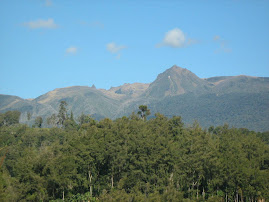
The second is Changbai Mountain in Jilin Province in the northeast China. There is a lake on the top of the mountain called Tian Chi in Chinese meaning “heaven pool”. Those who have been there say that the “heaven pool” is very spectacular. That is my dream place.

You know as a female, it is good to have a partner to go with so that they can take care of each other when emergency occurs. Of course if she has a boy friend or a husband, to go with will be better.

It is pity I don’t have husband and my boy friend is far away so I have to find someone else to travel with.

Jane is the one. She is my best friend and we work as English teachers at Shenyang University of Technology. She likes traveling too. Furthermore, neither of us likes to go alone. Maybe Chinese women are relatively dependable than the western ones. So Jane and I hit it off right away.

We chose to visit Changbai Mountain first because it is nearer than Inner Mongolia. While we were in Shenyang, Jane bought many newspapers, hoping to find a good travel agency with excellent service and low price in the travel column. But after some research we gave up this dream-like wild wish because that kind of agency doesn’t exist in the world.

We finally found one. We were charged 528 RMB (K213.82) each covering transport, board and lodging. This travel would take us three days with one day to visit the “heaven pool”. Most time of the other two days were spent on the road (it is about 7 to 8 hours by bus).

Besides that, some at-one’s-own-expense experienced scenery spots like drift in the river. The next day, August 7, we set out at 6am. The bus was completely full.

I was very excited all the way because I would see the dreamy Tianchi soon. Every now and then I ate the stuff I bought the last evening while appreciating the scenery vividly from of my window.

Both sides of the highway were vast green farms and sometimes big trees and flowers growing. There is always a sweet reception in my heart every time I see greens and flowers.

I was born in countryside and have been used to the trees and plants so I have a very close association with them. I thought that even if I was unable to see the “heaven pool”, the scenery along the road side is sufficient to satisfy by quest which is worth watching by everyone.

I had my breakfast and lunch on the bus. In fact I didn’t tell which breakfast was and which lunch was. I just ate the food whenever I felt hungry or ate something because I wanted to do so to keep occupied.

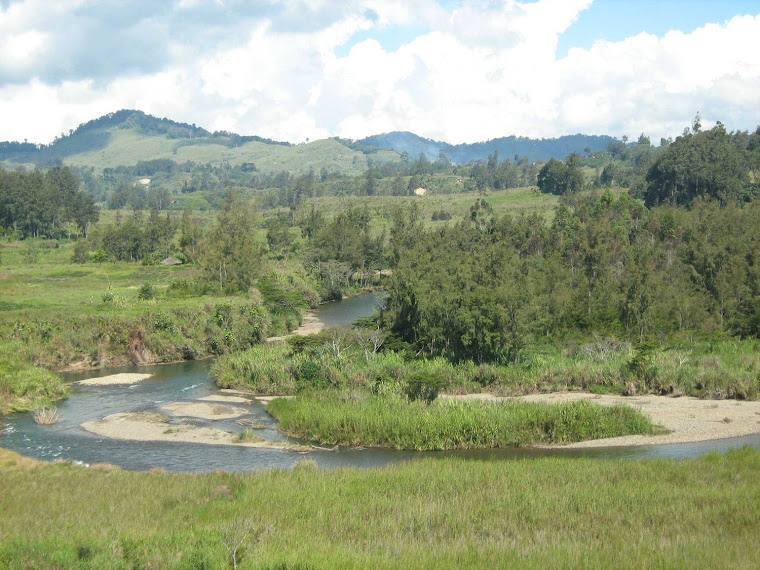
We passed many rivers, lakes and forests. Sometimes we drove on the winding road meandering along the river. The air was so fresh and it seemed very quiet outside.

We didn’t see many people walking, only some one-storey houses, some farm with cattle’s eating grass near the roadside. I like those places with rivers. In my opinion a place will have more spirituality if it has a river nearby or to run through.

How I wish I had a house in such place. There was no noise and disturbance. What it has there is fresh air, crystal river, big green trees and wild flowers. Living in such place will increase people’s longevity.

The group we traveled together soon got to know each other and talked to each other friendly. The atmosphere in the bus was very harmonious. I thought it must be that we were happy inside so we try influencing each other.

At about 6:30 pm, we arrived at a town named Er Dao Bai He at the foot of the Changbai Mountain and ate in a restaurant. Nine people shared one table and eight dishes and one soup on each table.

We altogether have 45 tourists so there were 5 tables for us. As to the tour guide and driver, they ate at a different table.

The rice was very good and one was allowed to eat as much he/she wanted. In fact, nobody can eat that much.

Nowadays, Chinese people’s living level has increased a lot and most don’t need to worry about food. They can buy and eat almost anything they want anywhere. So here the food on each table was enough for each tourist.

At last, there were a lot of left-over after the tourists finished the supper. We didn’t eat too much because we were not very hungry. Each of us had bought much food to eat on the bus.

At about 7:30pm we settled down in a hotel outside the downtown. Because of the busy travel season, the hotel was full and had inadequate beds for us so 5 people had to share one room instead of the original four. For some young or old couples, they stayed in double-bed room after applying and paid extra money (about 60 RMB per person) before they arrived at the hotel.

It was too late to ask for a standard room now because there is no room left. To my comfort, the room was nice, the sheet and quilt cover were white and clean. Undoubtly Jane and I were in the same room. Two were a mother and daughter.

The daughter is a sophomore in a university. Another one is a wife who came here with her husband and son. There is no room for the whole family so she (there were also several other women like her) had to share the room with us.

The people in town were very kind. Maybe they know that they depend on tourists to make a living so they are hospitable. The town is beautiful but not big, yet you can buy nearly anything you need.

Many tall buildings stand in the town. It’s rare to have tall buildings. The infrastructure is better than many other towns I have seen before.

To be honest, I didn’t prepare well for this travel so after arranging my bed I went to downtown with Jane to buy something for tomorrow’s mountain climb. Besides, we also wanted to know the small town.

That mother and daughter also went out with us but we parted after we arrived at the downtown. It was a little dark when we set out for town. I bought a cheap raincoat with 5 RMB (K2.) along the street and then a pair of shoe in a shoe store with 40 RMB (K16.13).

Jane and I each bought a bottle of water for the next day. Of course one bottle was not enough but we had a big bottle on the bus.

Next day, we could take it and fill it with pure mineral water because we would go to a place where water was cold and clear from the underground. It was much better than the water we drink at home everyday. Jane put the two bottles of water into a plastic bag and carried them.

When we walked back we had to pass a road with very thick forest on its’ sides. There were no road-lights so it was completely dark, so dark that you even could not see your own fingers.

We were not walking back, actually we were feeling back. When we were on the bus, our tour guide once said that there were also some bad guys in town so we were warned to be careful, esp. walking in the dark.

I consumed his words seriously at once as I was too scared that I started to drag Jane to run. She was not good at running. Compared with her, I was better so I had to pull her hard in order to run fast.

You can say I am chickenhearted. As long as not letting me come across a robber, I don’t care what you say. Finally we saw the lights coming from the hotel and we were so relieved. But just at that time when Jane stepped on the high part of the road and suddenly twisted her left ankle.

The two bottles dropped off from her bag and fell on the road. Her sudden scream really scared me. I hurried to help her and picked up the bottles. She limped back to hotel.

Before visiting the “heaven pool”, we were taken to visit “Volley Float Stone Forest”. It is the introduction of the valley. It says the Valley Float Stone Forest is a well-known scenic spot in the Changbai Mountain.

It is located on a rift created by volcanic eruption and diastrophism. It is about 5,000 meters long. Natural air slakes and rain wash have created about 30 sites with float stone varying in size. Some shape like snakes, some like eagles.

There are also a lot of clear small rivers, big trees and the forest are as vast as the ocean. They are the characteristics of the Changbai Mountain.

Here smoking is forbidden. The protection of the Changbai Mountain derived from Emperor Kangxi in Qing Dynasty. It was said that Emperor Kangxi found it too beautiful and the mountain was the birthplace of their ancestors so he ordered that fishing, farming, hunting and lumbering were all forbidden. The Chinese government has also taken a lot of actions to protect Changbai Mountain.

After visiting this valley we were taken to Baiyong Spring, where we could fill our bottle with the drinkable water. The water was so cold that I had to take my hand out from the water now and then while filling the bottle.

I lived on this bottle of cold water whole day, believe it or not.

The water from here is colorless, odorless, free from visible alien matter, crystal-clear, with no sedimentation or seston, nice and cool to drink, with unique sense to the mouth.

The spring has water temperature of 6.5-7 degree celsius. The mineral water contains cilicic acid of 48.5-49.97 mg/L.

By the way, the two scenic spots are not free or included in the 528 RMB (K213.82). We visited them voluntarily and paid 50 RMB (K20.14) to enter.

Going out from the Baiyong Spring, we were taken to the gate of Changbai Mountain and were going to visit the “heaven pool”.

We were not sure whether we could see vividly as the weather is unpredictable on the top of the mountain.

Note: The writer is Chinese who teaches English at Shenyang University of Technology. She loves PNG so much and believes her experience will give some idea on the importance of tourism products in PNG. For comments, e-mail m_yakai@hotmail.com or SMS 71489901.

Sunday, September 06, 2009

Madang Hopes for the Big Show Sept 16 - 19

This article was published Sunday Sep 6, 2009 by Sunday Chronicle under "Asia Pacific Perspective: China + column".
.............

By Mathew Yakai

IF ANY provinces currently values and prepares for a big celebration to coincide with Papua New Guineas’ 34th Independent Anniversary then Madang Province is one.

Madang Show will coincide with PNG’s 34th birthday. What an extravaganza and double feast for the people of Madang and the visitors who will join in this celebration, valuing the birth of our motherland and showcasing the cultural diversity of Madang and PNG.

With the theme, “Kainkain Pasin Tumbuna, Em Yumi Madang” is to show-off the Mountain, River, Valley and Sea people of Beautiful Madang to see if they can scare-off the flying foxes with their kundu beats. Come and see if that happens! Otherwise, the flying foxes would be an additional showcase for the visitors.

Not only that! The registered 45 singsing groups include groups from Morobe, Eastern Highlands, East Sepik and people from other provinces residing in Madang.

Chairman of Madang Festival Show Stotick Kamya told this scribe that last years’ show theme was, “Kainkain Pasin Em Yumi Madang” but the theme did not specify what kind of pasin (events). So this year his Committee decided to include “Tumbuna” to depict the absolute diversity of cultures Madang boasts today.

This is in line with the Committee’s ambition to fervently display to the children of beautiful Madang the fact of their cultural diversity. And visitors will join in this Show too.

The highlight of the show will be the traditional singsing dances to show the real “pasin tumbuna”. Another attraction will be the involvement of Madang International Community to showcase their traditional uniqueness.

If you are unable to go overseas to see and experience foreign cultures then this is your golden chance. Groups from India, China, Nepal, Australia, United States and others will be in their traditional costumes and show-off their pride with the message that not only PNG and Madang but the globe is truly diverse with cultures, traditions, languages, religion, ethnicity but yet we can live harmoniously with one peace. Thanks God for this!

Talking of international community, a former chef at Madang Resort, Dereck Frizel now resides in Australia will be in town with his five men band adding to PNG music the gospel, country, Western and classical flavors. He loves Madang and funds his own travel to the show to be part of the Event.

Bamboo band is synonymous with Madang. But in North Solomons they also use bamboo without guitar to make an absolutely unique sound. And across to our Melanesian brothers, the Solomon Islanders use bamboo pipes and they are referred to as “pipers”.

This scribe is compelled that Solomon Pipers and North Solomons bamboos have some commonalities in their proud music. In this Madang Show, Gate Way Band and New Age Band from North Solomons will mesmerize the show-goers. This is all about music out from an object called “bamboo”. Come and discover yourself.

Oh yes! During my childhood days, radio Western Highlands used to play a lot of Madang Bamboo band music’s recorded by Kalang Studio. Some of the Western Highlands string bands like Highway Rumors tried to copy the Madang bamboo band style but they could not because there was no Madang blood in them.

Chairman Mr. Kamya said, “We want to encourage bamboo band in the show. That’s the identity for Madang.”

Other events of the show will include greasy pole, marathon, tug of war, local brass band, gospel concert, string band, theatre group, bicycle race, marine games, floats, arts and crafts sales and many more.

Greasy pole will be different this time due to an experience last year. Prices will not be hanged up in the pole where the successful climber will get. Instead, they will be kept at the grand stand and the successful climber will present himself/herself to get the price.

Last year, the successful climber dropped the bicycle from the pole and somebody on the ground happened to get away with the price.

And for the first time, two poles will be erected where one will be for the young and one for the old. So at last, the old can see fit to climb the greasy pole. This will be a fun filled game.

Probably next time, we might erect another pole for the females. This is something for the committee to think about. But females are at liberty to challenge with their male counterparts to climb one of the two poles in this Show.

Another interesting event will be the fishing game under marine sports. In this game, the first person who catches first five fish will walk away with first price. But the second price will depend on the weight and sizes of the fish.

Canoe racing will be fascinating as well. People of all ages will be in different categories to paddle away fighting the waves to be the best. It would be exciting to see some highlanders who have never been to sea to paddle.

Mr. Kamya said his Committee planned to bring in the PNG Defence Force and the original Paramana Strangers to add color to the Show but due to financial problem, they will not be in town. But he said this will not hinder the excitement of the Show because what is currently in place is sufficient and full of events.

For the power band lovers, Madang show will not give prominence as the Show Committee is encouraging more traditional events like string bands, singsing groups and others that relate to real Madang culture for the youths to be proud of their province.

Mr. Kamya said more singing groups have turned up to register but they were refused because the current show ground is unable to accommodate.

He said last year, about 100,000 people passed through the gate and this year he is expecting even more.

“My problem is how to cater for them. We have produced more tickets compared to last year,” he said.

He is also expecting more international tourists this year even though the traditional Madang Show date has been changed to Sept, affecting their travel.

This scribe asked Mr. Kamya on the law and order problem currently seem to be prevailing given the regular media publicity. But the adamant Chairman is on focus and reiterated that there is no crime statistics in Madang Province.

“What is reported in the media is not alarming. Crime statistics by police is not alarming like in Port Moresby, Lae, Mt Hagen and other major centers.”

“Madang is a peaceful town and now that small crimes like bag snatching, attempted robberies etc are reported, they think it’s serious. It is not that serious.” Mr. kamya said.

He further said that Madang is experiencing rapid economic boom and petty problems are likely to happen.

“It’s part of life but we will manage this. No where in the world is a peaceful place as long as there is human being. Madang is no exception but ours is very minor compared with rest of PNG,” Mr. Kamya said.

He said his committee is arranging for Lae police to provide security with the help of Madang Police.

Mr. Kamya said the Ward Councilors in Madang and youths have also taken ownership of the Show to ensure a peaceful and enjoyable Show.

“We are confident that this Show will go well. We are confident with the police, CIS, communities in and around Madang.”

“We want to ensure the people enjoy their culture. There were minor problems last year but we managed it. This time we will manage it with the help of Madang peace loving people,” he said.

Meanwhile, business houses in Madang and Madang Provincial Government have sponsored the Show in cash and kind.

“Business houses have been generally good with their usual support,” he said.

Mr. Kamya personally thanked Ramu NiCo, though being new in Madang has been the major sponsor this year with K20,000 donated on Wednesday 2. Last year Ramu NiCo donated K10,000.

“I hope that Ramu NiCo will be our long term partner in this Show and other events in Madang. I thank the management of Ramu NiCo and Chinese Government as the Chairman of Madang Festival Show and Chairman of the Madang Chamber of Commerce.

Chief Technical Director of Ramu NiCo Dr. James Wang presented the cheque on behalf of Ramu NiCo at the Ramu NiCo Madang Office Complex.

“We are very pleased to be part of the Madang Festival Show,” Dr. Wang said.

Governor of Madang Province Hon. Sir Arnold Amet and Mr. Gu Yuxiang, Executive Vice President of Ramu NiCo were present to witness the ceremony. Others included officials from governor’s office, board members of the Madang Provincial Event Council and officials from Ramu NiCo.

Mr. Gu emphasized that Ramu NiCo is proud to be part of Madang community to create a harmonious society for all people to live in a friendly and safer environment despite their cultural differences.

“We are happy to support the Madang Show and be part of the Madang community,” Mr. Gu said.

Governor Sir Amet while thanking Ramu NiCo for the sponsorship said that his administration is fostering for a long term working relationship with Ramu NiCo for the benefit of the people of Madang.

“Ramu NiCo is here for longer and we have to create a social and economic partnership,” Sir Amet said.

Other business houses in Madang have also supported the Madang Show in cash and kind that will be used to ensure that activities of various kinds are staged so that the show-goers enjoy.

Madang Provincial Government under the administration of Governor Sir Arnold Amet sees that Madang Show is no ordinary Show because it will coincide with the 34th PNG Independence Anniversary.

Come and enjoy Madang Festival Show with the peace loving people of Madang.

Note: This commentary is in line with Sunday Chronicle’s mission to promote positive journalism in PNG. This is Sunday Chronicles contribution to encourage tourism in Madang. For comments, e-mail the writer at: m_yakai@hotmail.com or SMS 71489901

Wednesday, September 02, 2009

Over-matter on Reduced Emissions from Deforestation and Degradation in PNG

This article is published on Sunday Sep 6, 2009 by Sunday Chronicle newspaper in Papua New Guinea under "letter from China" column.
..............................

By Manson O’iki in Hubei, China

THERE’S a small but growing community of people who are trying to bring some clarity to the debate about forest protection in the run-up to Copenhagen, specifically the REDD (Reduced Emissions from Deforestation and Degradation) process.

A 'project based' approach for REDD would allow bits of forest to be 'bought up' by organizations, who'd pay to protect the forest in return for securing rights to the future carbon credits from it.

There are real problems with the project-based approach. Without a wider plan for making emissions cuts, it’s difficult to know how long the project will last, whether it represents additional carbon savings compared to 'business as usual', whether the forest being protected leads to other forest being cleared, a problem known as 'leakage', and increased vulnerability to corruption.

We'd actually argue that project based offsets operate as a distraction, discouraging real solutions to climate change and biodiversity protection.

PNG has been leading the way in international negotiations over avoided deforestation in the hope of curbing greenhouse gas emissions, an objective known as REDD.

However, a recent scandal has led to the suspension of the head of Office of Climate Change. This has happened at a difficult time when PNG should be working on a national legislation for REDD, and prepare for Copenhagen, instead of wasting time and resources on investigating our own Office of Climate Change (OCC).

Meanwhile, the OCC needs to get on with developing an Interim Low Carbon Development Strategy, which emphasizes the REDD policy agenda. Part of this involves looking at securing land for REDD and for benefit sharing.

Another part of this strategy involves looking at the drivers of deforestation and degradation in the country. Again, much needed work. You can't just buy up a few blocks of forest in the country, slap a REDD sticker on them and hope that deforestation will go away. Finally, an economic analysis of REDD costs is also needed in the country.

So much work, so little time. So how are we going to do it? The government is probably going to call in highly expensive foreign consultants to assist prepare for Copenhagen to develop the national REDD and climate change plan.

Now I can guess what some of you are probably wondering, shouldn't PNG be doing this all for itself rather than calling in expensive foreign consultants?

Well in an ideal world, which this isn't, perhaps and only if we had all the expertise we need. Remember that there are stacks of people fretting about whether PNG (and many other countries) are going to manage to get this all right.

How will leakage be avoided? How can REDD truly address the drivers of deforestation? How can we manage forest conservation at the same time as promoting a sustainable low-carbon development path? How can we increase agricultural productivity as a way of reducing pressure on forestry? Well, guess what? This is exactly the sort of thing that these highly expensive consultants know all about. Of course they don't come cheap, and they are not without their problems.

But PNG is a different country with a different set of problems, and a low baseline of deforestation is not one of them. So it will certainly be interesting to see what these consultants will come up with.

Where to find the money? Well UN-REDD is likely to be asked, and all the usual government donors. The Australians, in particular, might be a good source to tap. Our entire carbon strategy seems to be to buy carbon offsets abroad, whether or not these are produced by the rules and regulations of a mandatory market.

In recent months, a number of fascinating discussions have been held across several media avenues that have helped to further unravel the story of forest carbon deals in PNG.

This has helped to throw some light onto a process that had formerly been going on behind the scenes, and at least allow some level of public scrutiny. What is so informative about these discussions is that involves a discussion between some of the main players in private forest carbon projects in PNG.

Carbon Planet, one of the representatives of the landowners involved in a carbon deal in Kamula Doso.

Most of those involved in negotiating over REDD say that rules and regulations should be properly set before a market for these forest carbon credits is introduced and traded. But holding back the private sector from doing deals in advance of Copenhagen is impossible.

While REDD policy allows debate about whether it should work at a project level or a national level, the private sector is busy answering this question buying up projects all over the place.

Instead of a national baseline for deforestation that the government is trying to minimize, bits of forest here-and-there are being tied up in deals. And you can't simply blame 'carbon cowboys', charities and environmental NGOs are all doing project level deals as well.

How will these project level forests avoid 'leakage' and the movement of forest destruction to other areas of the country? They probably won't, which makes it a concern and which is why people arguing about whether REDD should work at a project or national level.

One question that crops up again and again in forums discussing carbon trading in PNG is the question of how such trading is possible and what laws allow it? The answer appears to be quite deceptively simple.

The laws that allow forest carbon trading are as simple as those that allow me to sell you any piece of property that I own. Indeed, I could sell you the spirits in the trees, if you were convinced I had the ownership rights to them and could transfer this ownership to you.

And this is in essence what is going on in PNG right now. For all the talk of REDD and carbon markets in the future between nations, the deals done right now and carbon being traded, seems to involve just a voluntary market between individuals and corporations. The market that offers you ways of offsetting your airplane flights, or car journeys.

Where does REDD come in? Well the idea is that when Copenhagen arrives, a deal over REDD would create a large and valuable mandatory market.

A highly regulated market where governments would be obliged to buy forest carbon credits in order to offset their pollution, mostly from power generation.

It seems there is an expectation that these voluntary agreements being done right now could somehow be turned into some kind of REDD credits and traded on that market.

And even if official trading doesn't begin for years, just the creation of REDD at Copenhagen would stimulate the market to produce options to deliver REDD credits.

So the point about these deals is that entrepreneurs are betting that the voluntary credits they are developing today will be transferable to forest carbon credits that can be upgraded and traded on the grown-up markets for more money later down the line.

And while that speculation might be unhelpful at this stage, far bigger risks have been taken in business for far less potential reward. So it isn't unexpected. Furthermore there is the attraction of potentially huge profits.

In some parts of the world, the cost of conserving an acre of rainforest is ludicrously low compared with even low estimates of the vale of the carbon per acre. That is sort of the point of a market, is that the private sector finds the cheapest ways to conserve carbon.

The trouble is that this is never going to be a normal market, its a highly regulated market created by national and international legislation in order to achieve a public good.

The public will simply not be comfortable with massive windfall profits for a few entrepreneurs, or even the landowners themselves. There is already an idea floating around that such profits need to be taxed, and put into other carbon avoiding projects.

Although it is hard to know exactly what is going on, I think it might be valuable to conduct a thought experiment.

Let’s imagine that I've got a couple of thousand dollars I want to invest in PNG forestry in a credit project. How might I go about doing this? Well for a start, I don't actually want to buy anything physical like a forest. I want to buy the rights to trade. And I want to part with as little money as possible initially, because I want to buy as many rights as possible.

I start a whirlwind tour of the provinces, the further the better. I make friends with the landowners and sweeten them up with cash and gifts.

I explain that the world needs to conserve forests because of something that has been put in the atmosphere, and that I'll act as a broker for them to make sure they get the best deal. I'll take a percentage, and maybe a fee.

I sign deals with the landowners that gives me the sole rights to negotiate and sell carbon on their behalf.

All I have to do now is hire a few consultants to buff out a few reports about how big the trees are and how happy all the locals are, and I'd be very nicely set up to do a massive post-Copenhagen deal.

What is more, if the consultant's reports look particularly convincing, I might even be able to recoup my initial investment at a very early stage by getting further infusions of investment by selling off a portion of my rights to someone else, perhaps in the form of some kind of option for REDD credits. With more cash in hand, I go off again in search of more rights to buy.

What makes all this even more fabulous a proposal is that if anyone complains about what I am doing, or questions its transparency or processes, I can cite commercial confidentiality and then complain to all and sundry about how all I am trying to do is save the world and give local people some kind of way of surviving without cutting down their trees.

I'm a good person and all these horrid people just want to make me out to look like I'm doing something wrong.

Some of these deals may be absolutely fine, we just don't know. What we need in PNG, is some way of publicly notifying these deals.

A simple way of doing this would be government-backed project deal webpages. Proposed forest carbon deals should be published on them, so that if any landowners feel there is something awry, or there are competing claims, this should be immediately apparent, and these claims should be published.

Kamula Doso is a legal nightmare. We don't want more of these cases. This is not simply private business. All these companies want to sell credits on the mandatory markets.

It’s going to be our money that is buying these credits. We have a right to more information. If companies want privacy over their deals, they have to guarantee that these credits will not be traded on mandatory markets.

It’s a small price to pay for access to a billion dollar public market that is ultimately paid for by higher taxes and fuel prices in developed nations.

Finally, given that there is a legitimate public interest, we really do need to know what the landowners understand by these deals and what they've been told.

In medical research a concept that has developed is "informed consent", it isn't just enough for a subject to say yes to an experiment or procedure, you have to be able to provide proof that the people who have agreed have sufficient understanding of what they have agreed to.

I wonder if this might be a useful concept for these environmental deals with local landowners. Here is a standard definition:

"Informed consent is a legal procedure to ensure that a patient or client knows all of the risks and costs involved in a treatment. The elements of informed consents include informing the client of the nature of the treatment, possible alternative treatments, and the potential risks and benefits of the treatment. In order for informed consent to be considered valid, the client must be competent and the consent should be given voluntarily"

In conclusion: More transparency over deals. Where they are being done, what financial arrangements and promises have been made, and what the landowners really understand and have been told.

I'm all in favor of markets for environmental services. But let’s recall that this is a special market, created entirely by legislation, for a policy outcome which is less carbon in the atmosphere for the least cost.

While the private sector must be given the incentives the world needs to invest money, this market will never sit comfortably with massive windfall profits, whomever they fall to. That is just one of the current unresolved debates underway over REDD.

Note: Manson studies Masters of Science in Petroleum Engineering at China University of Geosciences in Wuhan City, Hubei Province.

Monday, August 31, 2009

PNG’s Chinese language star travels to Huai Rou Sheng Cun Dao in China

This article was published by Sunday Chronicle weekly newspaper on Sunday August 30, 2009 under the the "letter from China" column.
....................

By NCEPU Beijing PNG Students

PAPUA NEW GUINEA’S first and ever new Chinese Language Star, Jack Pokoe who was awarded by China as the “Star of Chinese Characters” traveled to Huai Rou Sheng Cun Dao in China under a formal but special arrangement made by Beijing Chinese Education (BCE) authority.

This special travel included other foreign students who were also awarded Chinese Language Stars by BCE authority.

BCE authority felt very pleased to promote this travel and so proud to involve students from all around the globe to practice Chinese language and experience Chinese tradition during their travel.

Staying firm to the culture and tradition of the language, Jack has just experienced how important Chinese culture and tradition has practically helped enhance and enrich his Chinese learning abilities, skills and knowledge as a whole.

His first cultural experience involved a university travel to Shanxi Province, to an ancient Chinese city historically known as Pingyao Shi.

Shanxi Province is a distant province from Beijing, compared with Huai Rou Sheng Cun Dao, which is a cultural site within the vicinity of Beijing but at a closer proximity to Beijing City.

The travel to Shanxi was arranged by North China Electric Power University in Beijing, the Beijing campus university where Jack learns and studies in Chinese language as a Software Engineering student, currently with two (2) other PNG students, namely Joshua Oki and Joel Hip.

Joshua and Joel are students in Computer Science and Technology and Business Management respectively.

The main purpose of the travel to Huai Rou Sheng Cun Dao was to practically learn and experience the Chinese culture and tradition to appreciate its uniqueness.

The travel to Huai Rou Sheng Cun Dao was on June 06, 2009. This was after May 22, 2009, when Beijing Chinese Education Network (BCEN) specially awarded Hanzi Zhixing (the Star of Chinese Characters) to Jack.

Traveling from Beijing City is some thousand kilometers to Huai Rou Sheng Cun Dao. But access to that ancient town takes less than 4 hours by coach.

Shanxi, as compared with Hua Rou Sheng Cun Dao is almost 10 hours drive along the flat farmlands where one can find in the vast landmass of China today. The highway meanders like a stressing snake through the plains from the bird view.

The international Chinese Star foreign students who traveled to Huai Rou Sheng Dao were the Chinese power representative of twenty six (26) best foreign students of the Year 2009 International Students Chinese Speaking Competition.

These 26 best Chinese Language Stars represented their own universities. The total numbers of universities selected were less than China’s capital city, Beijing, which has a total of 32-plus universities.

The Chinese Star foreign students come from South Korea, South Africa, Vietnam, North America, Sudan, Russia, Japan, Papua New Guinea, and the others who were selected for the final and utmost Grandly-Xiu Chinese language competition, which was held at Beijing Language and Culture University in Beijing on May 22, 2009.

Jack Pokoe, the Hanzi Zhixing, was the only Chinese Star foreign student of Papua New Guinea to travel with these other international Chinese Language Stars to Hua Rou Sheng Cun Dao cultural site.

The misty cold condition of the light showering morning icily welcome the arrival of the two (2) jumbo coaches occupied by the Chinese Star international students and Chinese language lecturers at about 10 am to begin the site walk.

The site walk had begun in teams of Chinese Language Stars, after advice and information were given by the Chinese language lecturers and a Chinese culture representative at the site.

A total of four (4) teams were formed, each having a representative to monitor the group’s participation during the travel. Each team’s participation was enjoyable and exciting through the involvement in Chinese cultural activities. The cultural activities ranged from a variety of ancient Chinese history, custom and tradition.

The involvement of each foreign student in the cultural activities showed the value of Chinese tradition and the language itself.

During the site travel, Jack, the Hanzi Zhixing involved in Chinese dialogues with his team members. The other three (3) teams, including communicating in Chinese with the accompanying Chinese language lecturers from among thirteen (13) best selected universities, which included North China Electric Power University, Beijing University of Technology, Tsinghua University, China Renmin University, Beijing International Language University, and Beijing Language and Culture University.

Huo Yue Hua, was the only senior Chinese language lecturer from NCEPU in Beijing to guide and advise Jack and his South African university mate from Rwanda, named Samuel, both of whom have succeeded well into the extreme of Chinese speaking ability, and also have gained the skills to comprehend in Chinese.

The Chinese Stars were involved in Bow and Arrow Shooting, Stump and Axe Plunging, Grains Grinding, Plastacine Art Working, and most importantly included Chinese Ink Art Designing.

Through the involvement of these cultural activities, Jack has gained a rewarded experience from unforgettable China.

Chinese Ink Art Designing carried on with conversations among the traveling group. As being spoken and written of, Chinese ink has a unique history in ancient times in China.

Chinese ink and design with writing had been developing rapidly in the past until today. The history still remains.

Jack says that this travel was a wonderful China experience to use Chinese ink and learn Chinese Art Designing. This event was a special cultural activity which took place in a Chinese traditional dye house, which was built in such a way to stand out Chinese traditional styles, of which the most common style is the Chinese Dyke house.

Instructions were given by the Chinese art designers, whom were females of this skilled art. Jack followed the instructions in Chinese language and learned Chinese Art Design with the other Chinese Star international students.

Chinese language was the required language that was used to converse with each other while the student was concentrating on the art work in the art design room.

This Chinese traditional dye house displayed paintings that resemble Chinese Art history. Another similar style house displayed Chinese artifacts ranging from plastacine to ceramic artifacts that portray images of ancient China.

Chinese custom and tradition originally and naturally binds hand in hand with the Chinese language, which is nationally utilized by the Chinese people and less than estimated 100 million foreigners as a dynamic language in education, work, technology, health, transportation, communication, and in the latest rapid boosting of China’s development and economy. Therefore, the traveling group’s main communication was still conveyed in Chinese.

Even though English language is commonly known and used by these Chinese Star foreign students, it is misunderstood by majority of the native speakers, still holds sufficiency, and is being translated in communication and writing in Chinese.

The Chinese language lecturers accompanied the Chinese Star foreign students around the cultural site while speaking with them in the Chinese standard language formally known as Chinese Mandarin.

The foreign students experience that in order to stay in tune with the language. The students should be accustomed to its custom and tradition, which are highly respected by the natives and government of China.

Chinese language is not very easy to learn, study and/or study with because it is too complicated and complex. Chinese Mandarin is simplified Chinese but still too complex and difficult to easily grasp and use in writing, reading, speaking and listening.

Misunderstanding in speaking and listening can result in a common response by the native speakers using Mandarin as “Ting bu dong” or “Mei ting dong”. Because of this misunderstanding communication is not easily conveyed between foreigners and the Chinese.

Even more difficult, the language tones have distinct pronunciation, which is certainly misunderstood in oral communication unlike English’s straight sounding tones.

Furthermore, writing and reading Chinese characters is the toughest challenge but a rewarding experience being gained by the international foreign students.

Chinese language is rated as one of the most difficult languages to learn, together with Arabic, Japanese and Korean, for people whose native language is English.

But in PNG, we have more then 860 different languages where we are adopted to different cultures and languages. This places any PNG students who are interested to study Chinese language to grasp the basic elements of Chinese language easily in a short period of time.

Note: Jack Pokoe is a PNG Student at North China Electric Power University, Beijing and studies Software Engineering under the Computer Science Department. This column talks about PNG student’s life in China.

Sunday, August 23, 2009

China in Kyrgyzstan: lesson for Oceania and PNG

This article was published under Asia Pacific Perspective: China + column on Sunday Chronicle on Sunday August 23, 2009.
......................

By Mathew Yakai

CHINA’S presence in the world and the region today is welcoming given Beijing’s growing economic power with direct multilateral approach in many issue areas.

If there is any year in my existence that I can think of which brought China into many challenges and achievements then it was last year, 2008.

China stood the harsh snow storm, overcome the devastating earthquake, successfully hosted the Summer Olympic, successful space exploration, overcome the dumpling issue with Japan, the toy issue with United States, took responsibility in the melamine saga and fixed it, engaged fully in the world financial crunches, direct shipping, flying and postal services with Taiwan, chair in the ongoing Six Party Talk in the North Korea issue and many more.

After its economic reform in 1978, China has surprised the world with its persistent economic growth that has brought many Chinese out of poverty, created abundant job due to foreign investments, and becoming one of the worlds “chimney” that no country would ignore.

On the bilateral level, China is also enjoying good relationship with many countries throughout the world.

Kyrgyzstan is no exception. The country in East Asia, is one of China’s important partners in many issues, including economic trade and investments.

This scribe talked to Abdisait Karimbekov from Kyrgyzstan to find out about China’s investment in his country.

Abdisait is currently pursuing masters’ degree in International Relations at Jilin University, China, under the Chinese Government Scholarship.

Being a representative of China Investment Cooperation for Export and Import of Machinery while pursuing his degree, Abdisait is compelled that China’s investment in his country is important.

“China’s investment in Kyrgyzstan is important because we have state projects like road construction, railway construction, energy and water power station and other important state constructions that need top notch experts,” he said.

Abdisait said that though Russia is a “big brother”, it can not adequately provide resources and expertise his country needs to develop its economy.

“We can find a lot of expertise and equipments in China. Russia is an elder brother but they do not have adequate capital to cover all projects in Kyrgyzstan,” Abdisait said.

Abdisait is well aware of his country’s position and the importance of China because he was directly involved in a lot of state projects.

Some of his tasks involved inviting potential investment from China to meet with officials from his government including important ministries like Transport and Energy, Department of Construction and Foreign Affairs Ministry.

One of his milestones was the signing of a Memorandum of Understanding between the Ministry of Transportation of his country and China Machinery and Export Cooperation last year May. The negotiation for viable projects is currently undergoing.

Abdisait admitted that he has negotiated and arranged for a lot of meetings between the officials of the two countries.

He said there are a lot of foreign investments in Kyrgyzstan but China’s investment is picking up because of its commitment, technological know-how, and efficiency in project implementation and of higher standard of service delivery.

“China provides its investment at a competitive price, compared to others,” he said.

He said Kyrgyzstan imports 50 percent of its goods from China on a very cheap price, but the quality and standard of the products are the same as those one would buy from Russia or Europe in a higher price.

“That’s why other goods and services including investments are cheaper compared with other countries,” he said.

Abdisait also highlighted an important road construction from China to Kyrgyzstan which is more then 100 km. This, he said, would provide easy access to both countries market and improve economic trade and people to people diplomacy.

China and Kyrgyzstan are currently negotiating for China – Kyrgyzstan – Uzbekrstan railway which will benefit both China and Kyrgyzstan having excess to European markets.

The railway alone when constructed will boost Kyrgyzstan’s economy and provide a lot of job opportunities for Kyrgyzstan.

He said the construction once approved will engage a lot of China’s expertise.

Most of the economic and trade relationship between the two countries are fruitful through the Shanghai Cooperation Organisation (SCO).

The People’s Republic of China, the Republic of Kazakhstan, the Kyrgyz Republic, the Russian Federation, the Republic of Tajikistan and the Republic of Uzbekistan were the founding states of the SCO

Shanghai Cooperation, signed in 1997 is aimed at strengthening bilateral, economic and military relationships between the member countries

He said Kyrgyzstan has a lot of mineral resources like gold, copper, coal and other resources that need to be explored and seek world market, and finds China’s investment relevant at this time.

When this scribe asked if China is in Kyrgyzstan for economic reasons: for natural resources and find markets for its products, Abdisait said, “this is an issue that generates a lot of debates in many countries.”

The current International Relations student with an undergraduate study in diplomacy says that whatever is negotiated between two countries must be respected by any countries and organizations, as long as it does not pose any threat to any countries.

Abdisait further commented that the two economies are complementary, China has what Kyrgyzstan needs and Kyrgyzstan has what China needs.

In this case, he said, they negotiate for benefits on win-win situation so both parties are happy.

When it comes to the issue of corruption, he commented that this is an area where responsible government and company officials must take serious note of.

Abdisait believes that there are law and regulations to guide such cooperation and they should be respected and upheld.

He believes that his country’s government officials must be honest when negotiating for state projects, in order to protect their country’s sovereignty and their integrity.

From China’s side, he said that they are genuine and want to work honestly with his government.

Abdisait admits China’s growth and influence in the region and the world but he is optimistic that this is not a threat but a gain for many developing countries like his.

He supports China for discouraging war in Beijing’s foreign policy and upholds peaceful development.

Abdisait, speaks his local Kyrgyz language, fluent Russian, Chinese and English. He completed his undergraduate majoring Diplomacy and now working on his masters, majoring International Relations.

Asked what he wants to be after his masters, “I want to work in the field of investments and negotiate with foreign investors to invest in my country.”

This is a job well suited for him given his different language capabilities.

But this scribe told him that he would make a good diplomat given his study major and language capabilities.

“No, in 2012, I want to enter politics and become an MP and be responsible in the field of foreign investment, and deal with China. This will give me some power to control some of my country’s resources from being exploited. I will make sure the local laws are followed by investors.”

“The sovereignty of my country is important and I must directly involve protecting it, both by laws, negotiations and politics. I can speak many languages and understand different minds and I am able to deal with foreign investors. This is lacking in my country now,” he said.

This scribe conducted the interview at Jilin University student dining hall on Friday 19th Dec, 2008.

Looking into his eyes, Abdisait appeared very serious with what he said. He always tells me. “Learn the language and you understand Chinese people. They are good, they are friendly, and we must know the language to work with them.”

I agreed with no doubt about that!

After talking to Abdisait and writing this commentary, I am thinking of genuine investments by Chinese multinationals in the Pacific region and PNG that can rescue the starving economies from the woes.

Having been in China for a while and had some good train and bus ride in the vast landmass, I am amazed by its rail way and road construction.

If China can build the road from China to Bishkek, the capital of Kyrgyzstan then the Pacific island countries can sit down and negotiate for similar projects from China.

All countries know that an efficient road and railway system, with reliable electricity and communication is the driving force in any countries development.

China has shown in many developing countries that it is willing to help develop their economies.

It takes a heart, a mind and dedication to realize China’s genuineness.

Don’t judge by the cover or western media speculation. Engage China and you don’t regret.


Note: “Asia-Pacific Perspective: China +” looks at Chinese society, culture, economy, governance and China’s role within the Asia Pacific region and the world over. It mainly focuses on how PNG can learn from China’s experience. Contact the writer on m_yakai@hotmail.com or SMS 71489901 form comments

Come and see, feel and experience Madang Festival Show

This extra commentary was published by Sunday Chronicle on Sunday August 23, 2009.
..................

By Mathew Yakai

PAPUA New Guinea is truly a land of a thousand tribes and cultures.

Nowhere else in the world will you find over 800 different languages and rich and diverse cultures and traditions.

This cultural varieties and richness is showcased every year in cultural shows and festivals which gather together thousands of tribes’ men and women in their traditional finest.

These are sights and sounds that will stay in your memory forever.

In terms of language, two provinces in PNG stand unique. Enga Province has only one language while Madang has the highest (more then 30) different languages. Others fall in between.

So when you want to experience cultural diversity in few days with little money then Madang is definitely the destination.

But no other days are as perfect as the days when the infamous Madang Festival Show is on.

That is why both international and domestic tourists must mark on their calendar and itinerary the famous Madang Festival Show from September 16 to 19, only three weeks from today.

The Madang Festival Show was officially launched on Friday August 14 at Madang Resort with the ribbon cutting performed by Pete Celso, Executive Vice President and Managing Director of RD Tuna, Madang.

The ceremony was witnessed by Chairman of Madang Provincial Events Council Stotick Kamya and Mayor of Madang Town, Michael Kamo during the Events Council Fundraising Committee Corporate Dinner.

Major business houses in Madang were present during the ceremony.

Madang Festival Show was formerly known as Maborasa Show in the early 1980s.

MABORASA stands for Madang, Bogia, Ramu and Saidor. But people along the North Coast and Karkar Island complained that Maborasa is not representative of Madang when Sumkar District was not included.

Under the new Provincial Events Council in 1991, the current Madang Festival Show was adopted and held its first ever Show.

But for 18 years after 1991 till 2008, Madang Festival Show was put to rest due to various problems faced by the Council.

It was revived again last year, 2008. This year, the Show will be held from Sep 16 to 19, coinciding with the 34th Anniversary of PNG’s Independence.

Since the long break till last year, the adamant working Provincial Events Council under the strong chairmanship of Stotick Kamya, this years Event will be a bigger one.

The Festival will be a breath taking and refreshing for the youths who have not seen their proud and unique cultures which started only last year after a long recess.

During his opening remark, Mr. Stotick Kamya told the business houses in Madang who attended the Corporate Dinner that Madang Festival Show was started last year after a long recess and this year will be the second time where the Events Council is planning for a bigger Event.

Mr. Kamya said the Festival will see events like traditional dances, canoe race, game fishing, greasy pole, pillow fighting, coconut scraping, coconut husking, tug of war and many more.

The soldiers from Moem Barracks will be invited to add more flavor to the event on Sep 16 when PNG turns 34.

He said the Events Council planned to invite international groups from New Zealand, Australia and China but this could not eventuate due to financial and logistic problems. But these will be considered in the future.

“We will also have the international night where international community will put their own dressings and costumes to show their country of origin,” Mr. Kamya said.

He also thanked the business houses for attending the Corporate Dinner which is part of the Events Council’s fundraising drive to meet the cost of the Festival.

Mr. Kamya thanked business houses, organizations and individuals in Madang and PNG for their past support and looking forward to more in this year’s Festival.

Guest Speaker during the Corporate Dinner, Pete Celso, Executive Vice President and Managing Director of RD Tuna told the gathering that his company has supported the Event since it arrived in 1996 and this year will receive the same treatment.

“We have started by K10,000. and sponsored a table,” Mr. Celso said.

In his speech, Mr. Celso reiterated that the people of PNG must focus on positive things and attitudes, instead of negative things to see tangible and positive changes in the country.

“Having lived in PNG for 15 years, I have seen people focusing on negative things, but there are lots of positive things to be seen and accepted,” he said.

Mr. Celso reiterated on the ethic and logic of working smart, hard, be ambitious and make progress in individual lives, family, communities and the country as a whole.

“No one dies for the Vision but for the Cost. You must have the right Vision and fight for the right Cost,” he concluded.

Mr. Celso who has lived in PNG to understand the development trend said that Madang Show is important to bring together traditional tribes to see commonalities in their cultures to live harmoniously in diversity.

He said Madang alone has the largest language in PNG and this can give money for value to potential tourists who plan for Madang Show.

The gate fee is only K5. for adults and K3. for students and children. From this, the show goers will learn a lot from the Show including varieties of traditional dances and events like greasy pole, pillow fighting, canoe race etc.

The corporate houses in Madang will also showcase their products, ranging from mine explorations like multi billion Kina Ramu Nickel Project to Ramu Agro Industries in agriculture and others.

But remember that with around 30 different languages in Madang alone, the upcoming Madang Festival Show will be overwhelmed with different cultural flavors because the legacies of WWII and outside influence had minor impact in this ingrained Melanesian culture.

Due to changes by outside contact over the years, cultural loss has been great, according to some reports, but isolation of many groups has caused that rate of change to be diversely uneven.

Because of the environmental diversity, Madang also has a very diverse culture as well with tall lithe coastal people from Karkar Island, short nuggety highlands men from Simbai and river people from Ramu.

Many Madang area costumes include bamboo frames decorated with the very common cockatoo and parrot feathers as Birds of Paradise are relatively uncommon.

The Ramu people are prolific carvers and the lower Ramu has cultural links with the villages of the artistically diverse Sepik River region.

It is interesting to note that the resurgence of Madang Festival Show has seen many people donning the fantastic traditional dress, feathers and paints of their ancestors.

Foods eaten include those grown in fertile coastal gardens, shellfish and fish, fruit, green vegetables, bananas, taro, sweet potatoe and yams especially in its lower reaches. The mountain people have very good gardens with excellent produce.

Linguistically, Madang province is typified by a large number of very small language groups, many with fewer than 1,000 people.

Austronesian sailors settled on this coast some 5 to 6,000 years ago and the languages of these intrepid but largely unknown sailors are found along the coast of the province.

Lukep, Gedaged, Manam and Bilbil languages are examples of this. Inland, the Katiati, Hinihon and Saki languages are examples of Papuan (non-Austronesian) languages found in the region.

The Ramu river language includes Gamei, Giri, Tangu, Romkun and Igana and the Rai Coast language include Somau Garia and Usino.

The volcanic island of Karkar is unusual in that it is shared by the Papuan language Waskia and the Austronesian language Takia.

Given the language diversity and cultural difference, the upcoming Madang Festival Show is a must see for those who know very little about Beautiful Madang.

Having lived in Changchun city, the capital of Jilin Province in China for two years was memorable, but there is no such place as an idyllic Pacific coastal town as Madang.

Kalibobo Light House, one of Madang’s infamous icon built during the WWII stands tall today attracting tourists, while the blue sky over Madang is flocked with the ancestral inhabitants, the flying foxes.

Walking from Kalibobo Light House towards Smugglers Inn along the stressing lawn, with coconut leaves above swing to the strength of the ocean breeze while the sea, just a stone throw away stressing as far as the eye can see brings freshness to mind to accept the nature in harmony.

Changchun City known for its car factory has vehicles of all shapes and sizes occupying the streets, while the pedestrians is so huge that one shoves through daily.

And the factory chimneys swirl smokes into the blue sky making invisible the sunset and sunrise.

But in Madang, the sun rise is as perfect as sun set depicting the perfect harmony of Gods blessing over humanity. In Madang, we say thank you to God for the visible sun.

While the daily life in Changchun is always in rush, Madang is so harmonious and slow in line with its economic statutes, where the people live in perfect peace and harmony with the nature and culture intact.

And Madang is not an ordinary province in Papua New Guinea. It is a popular tourist destination in the country, both for domestic and international tourists.

Welcome to Madang Festival Show from Sep 16th to 19.

Note: This commentary is inline with Sunday Chronicles mission for developmental journalism in encouraging positive journalism. Sunday Chronicle will carry more commentaries in the following Sundays to encourage tourism during Madang Festival Show. For comments, contact the writer on m_yakai@hotmail.com or SMS 71489901

Politicizing Climate Change is dangerous for PNG

This article was published under "letter from China" column with Sunday Chronicle on Sunday August 23, 2009.
...............


By Gene Drekeke Iyovo, Wuxi

THE issue of climate change is a new science even though it is taught and discovered recently due to phenomenal changes since the beginning of time.

In Papua New Guinea (PNG), it is totally new. Government, statutory bodies, private and individuals need to understand some real basics of science before partying in camps.

Firstly let’s look at the causes of temperature rise in the world. According to real science, the only factor that makes the earth warm is the sun.

More than 90 % of the causes causing temperature rise in the past century was only 0.8 ºC and was due to sun while 10% of which accounts to natural variations prone to vegetational changes governed by environment variability and planetary energy balance.

Many focuses has being laid on carbon dioxide and methane as green house gas while over looking the water vapor which is the greatest concentration known and is one of the green house gas planetary climate.

Energy is not needed to drive the water cycle; the energy comes from the sun evaporating- cooling in stratosphere region and transpiration in plants.

Without arguing the heat conductivity or heat capacities of carbon dioxide, methane or water vapor, consider from equilibrium point of view. In equilibrium concept, a concentration of same kind move to lower concentration, now carbon dioxide still remains 0.03 % in the atmospheric composition since science was invented! This is due to equilibrium and natural laws of balance.

All plants are satisfied with the 0.03% carbon dioxide concentration in the air. Water vapor at its current routes either via its normal water cycle or by plants through transpiration for exchange of oxygen keeping animals alive. In other words, we need carbon dioxide and water vapor if we need oxygen to live.

So what are all these stories and fears about climate change on Carbon dioxide? Can man save the planet? How many fauna and flora can be saved planting trees? These are the fears that are instigated by half baked individuals on the subject and those hungry for rich, power and influence taking advantages of the poor uneducated mass.

This is not ruling out that there is no climate change and everyone else go to sleep! There is change but gravely misunderstood and it’s already a government and people’s liability. It’s already a global universal god or religion.

Take away the intense politics surrounding the global warming debate. Take away the self-interest groups, business interests, legal, bureaucratic and mass media influences that all seek to make a buck out by driving public hysteria over the fads and fashions of the age. Let’s focus on real science.

Ocean temperatures are these days measured by 3,000 automated Argos buoys deployed in the seas. These buoys present a challenge to global warmers. They have failed to detect any imminent signs of climate change.

According to Dr. Josh Willis who worked for NASA Jet Propulsion Laboratory indicated that only a slight cooling over the buoys’ five years of observation, but that drop was not anything really significant

Added to this finding is the evidence produced by NASA’s eight weather satellites totaling 7,000 land-based stations. They take more than 300,000 temperature readings daily over the surface of the Earth.

In 30 years of operation, the satellites have recorded a warming trend of just 0.14 degrees Celsius—well within the range of normal variations

The results concluded that global warming campaign was inconclusive hugely exaggerated.

The sinking islands are figured as one of the causes of climate change. This may be a grave mistake either. To consider the issue of rising sea levels and sinking islands, one has to consider the change of ocean currents, apart form mini currents with a set region like Guinea current.

There is this huge global ocean currents called the Themohaline circulation (THC) or ocean conveyor belt which is driven by global density gradient created by surface heat of fresh water fluxes.

This is known to change direction in a space of time in decades or centuries which can also be influenced by elevated salt concentration due to increasing land use and earth’s heat from sun due to routine tilt and rotation over time.

This means any island or a little land mass in its new direction will experience heightened level, over flooding or sinking. This does not mean ice in the North and South poles will necessary melt to overwhelm the islands!

The West industrialized since 1800’s and for the past 200 years industrialization rigorously destruct forest, huge minings, increased petroleum usage that increases their increasing luxuries, glass house and skyscrapers for these long years until effect find them out if there may be. All these times, PNG has contributed none!

This will be supported by the fact that our atmosphere contains 730 billion tons of CO2. Each year about 120 billion tonnes of carbon are cycled via plants on land and 90 billion tonnes via oceans.

Human emissions account for about seven billion to 10 billion tonnes, or less than 5 per cent, of the annual CO2 flux. This means 95% of the emissions follow the natural law of equilibrium dynamics while 5% emitted are sucked up by oceans increasing acidity due to weak carbonic acid formed by soluble state of the carbon dioxide increasing plant growth in seas and oceans.

Comparably if Australia is said to contribute 3.5 % of that component from 5 % (10 billion tones) coming from human emissions and New Zealand at 0.34 %, what is PNG’s contribution?
According to National Climate Change Policy Framework released by the Climate change and sustainable development office in PNG is stated that PNG has contributed 1.8% of the forest degradation!

That means we are better industrialized than developed New Zealand or about to size great Australia. It is also stated that the emission is projected to go 127 % of which 42% is from Asia Pacific region while the under developed transport sector with 1 in 2000 with cars are blamed for 20 % of the green house gas emission. Ridiculous!

More over, land use and increasing industrializations was blamed for increasing the emissions when no industries like those in Australia are found in PNG. This is a laughing matter when people are still burning firewood to fry flour balls for ten toea and are blamed and taxed.

Scientifically speaking, to give data as such mentioned is done by proven methodology and machines by experts and interpreted as intended. For PNG to be responsible for gas emission since the first fire and flour ball era is worth the argument.

Huge industries like metal refining, steel making, nuclear power plants, coal, etc are not here that shake the atmospheric gaseous composition to detection, unfortunately we have none and yet we will pay tax!

Amazingly, global warmists have even measured cow fart and said to stop cattle rearing due to methane production from their digestion and wish to turn everyone to vegetarian kind of population.

They have imposed tax on them by forcing money out of people for fear of unknown about global warming making it more subject to vigorous argument. This is robbery. Soon, there is expected global taxation system in the name of global warming.

Politicians who find difficulty in gaining consensus between political parties on issues of vital importance are suddenly finding common ground on the global warming issue. One prime example was Germany’s Chancellor Angela Merkel.

When faced with great divisions within the European Union on a range of issues during her leadership of last year’s EU summit, she cleverly played the global warming card, raising that issue to the top of the summit agenda.

Predictably, all parties fell fashionably in line behind her on this one single issue. Thus achieving consensus on what the media has seized upon as an issue of vital global importance, Merkel was able to snatch victory out of the jaws of what may well have otherwise been billed as a debacle. Leaders using global warming cards are not necessarily scientists but for greed of power.

But there is a cost to such politicking. Governments are imposing crushing tax burdens on industries and individuals in efforts to “solve” this illusory problem.

Finally, if PNG was serious with global warming and emission, if they said that 20 % emission comes from vehicles and fuel burning, I find it contradicting when no mention of alternative biofuels was emphasized, and still advocated to get coal powered energy supply which is the worst in light of global warming!

It was also a failure, when and how and by what means were test and analysis obtained to convince the tax payers as to its validation of the data.

PNG climate change office has a vital role to play, but when it plays wrong, we will have serious consequences. I believe it will play the game to sustainably and help the lives of the natives and not to serve foreign interest or personal gain.

Look at China who’s being blamed for huge pollutions, is now going green by more eco friendly industries and biofuels while vigorously developing its industries to high tech level.

This is her right as an independent sovereign state to dirty, clean and minimize manipulations without outside control on its internal activities. China has 1.3 billion people to give better life then a couple of useless fauna or floral under going mutation some where in Alaska!

For PNG to be misguided while claiming to be a Christian country is so funny when God said in the book of Job 26:7 that “God hangeth the earth on nothing. He knows climate change better than man, Sciences proves the magnificent work of God (Psalm8:3) and knows every changes when he called each star by name (Psalms 147:4) or know each of our problem when every hair on our head is numbered (Mathew 10:20).

Aren’t the almost 20 minings not enough for PNG’s developmental progress? Leave the forest along!

Note: Gene Drekeke Iyovo is a Post Graduate (Masters) students whose research is on Sustainable Energy Development at Jiangnan University, Wuxi, China. Contact Mathew Yakai on m_yakai@hotmail.com or SMS 71489901 for comments.

Sunday, August 16, 2009

Students: Promote PNG in China

This article was published by Sunday Chronicle on Sunday 16th August, 2009 under "Asia Pacific Perspective: China +" column.
.....................

By Mathew Yakai

THE last two articles in this column specifically looked at what potential students who will leave for studies in China this September will face.

In this article, I would like to reiterate the importance of promoting PNG in China. This is given the fact that the students will not only go to China to study in their specific subjects but also represent PNG in China in all their conducts.

In other words, they will be PNG’s student ambassadors in China in their respective rights. I had the privilege to represent PNG in China as a student and when looking back, I am satisfied, yet wish I could do more.

Those who had the chance to go abroad will know that the first thing one do when introducing himself/herself is stating his country of origin.

When in China, I had the same experience. When I tell Chinese students and friends, most of them don’t know where PNG is located. They think that PNG is some where in Africa or in USA.

They don’t believe that there are some black people living in the Pacific sharing land border with Indonesia. I went to an extent of convincing them that yes, am a native Papua New Guinean.

Even some international students do not know where PNG is located. So it is our responsibility as students in China to carry out the awareness of PNG and its uniqueness.

When I was in China, I engaged myself in many social activities with an aim to make known PNG to the broad Chinese students.

I do not blame them for not being familiar with PNG because PNG is not a major player in the region and world, like USA, Britain, Japan, Australia etc, or not like Iraq, Pakistan, Afghanistan etc which are associated with terrorism and attracting news headlines.

PNG is peaceful, yet unpopular to many. But the fact remains that PNG is so diverse with cultures and traditions and has one of the largest language (860) in the world. When I tell Chinese students and friends, they are amazed.

When you are in China, I assure you that many Chinese students would want to befriend with you. I made a lot of friends.

Their aim is to improve their spoken English and I used the opportunity to improve my Chinese and also know more about China. So once I became their friends, the first thing they learnt from me is of course my name and country.

Then I tell them more about PNG and eventually they are interested in PNG. Every weekends and afternoon of weekdays are occupied with either dinner or lunch with long chats.

I also became the member of biking club. During summer, we would bike to nearby cities like Jilin, Harbin, Shenyang and Dalian, including all little streets, parks, zoos etc within Changchun city.

In the biking club, we have more then 80 members. That also provided me the opportunity to promote PNG. And I also used the opportunity to know Changchun and other parts of China well through biking.

I suggest that one of the best ways to know China well is through biking. We decided to bike to Tibet but due to some problems in that province, we cancelled. But my dream to bike to Tibet, the highest city on earth still remains.

Another way I used to promote PNG is when talking to students in Universities and high schools. Teachers would invite me to speak to them about PNG.

When I am invited, I take my Tolai basket, and wear my highlands cap when presenting myself in front of the class. I run down all the interesting features of PNG and make all students love my country.

During that time, I also sing one or two traditional songs and reiterate to them the uniqueness of PNG. I also provide them with website address where they can read and know more about PNG.

One time I was invited to speak to an English class at Jilin University and one student asked me whether PNG recognized One China Policy and I told her that PNG does. She was so happy and thanked PNG government.

Another student asked me whether it is true that PNG men marry more then one women. I told them that it is happening even today. Then a female student asked if I will marry more then one wives and my answer was “no”.

I told her that it is repugnant to the general principal of humanity, and I feel that it is not fair on the part of our mothers and sisters in PNG. This is my own opinion.

I jokingly told them that if they want to have more then one child then they consider marrying a PNG national because in China, they have One Child Policy. All of them burst laughing!

All universities in China also have what they call Big Days. A day is designated by the foreign student office of individual universities where foreign students and Chinese students would showcase their countries.

I love this day because I get my self into PNGs traditional gear with my face painted to show-off PNG to the world.

I was so silly not taking with me the full traditional gear. I only took a Tolai basket and a highlands cap.

So when the Big Day approaches, I wear a Pacific laplap, carry my Tolai Basket, wear the Highlands cap with my face painted using a red and black marker.

At my stall, I print all the colored pictures of PNG culture and tradition and have them pasted on the wall with a small PNG flag while my laptop plays clips of PNG cultures and songs downloaded from youtube.

I also had a guitar so when the clip on my laptop plays, I strum the guitar and sing all the popular hit PNG songs. I make it so loud that I get the crowd around me.

Sometimes, I sing some of my traditional songs and that makes people puzzled. To be honest, I get the biggest crowd. Many come to me asking for more details.

At Jilin University, I am the only PNG student and I try to put up a one man show. Other PNG students in other universities do the same during their Big Days.

In the afternoon, respective students will be invited to the stage to perform one or two items from their countries. When my turn comes, I get my gear on with no shirt on and shout into the mic singing one of my traditional songs which was taught by my late mum.

When I take the stage, the crowd goes really wild because PNG’s culture is so unique and it amazes them.

Because of my active showcase, I have been invited to perform to a Russian delegation that visited Jilin University, and also was invited by Changchun TV to perform live. Many schools in Changchun also invited me to perform.

When I had these opportunities, I try to emphasize to them the name of my country, where it is located and why it is unique and fascinating. And am sure that from there, the audience Google to know more about PNG.

I am satisfied that at least I have promoted PNG in China. During my travel on trains and buses within China, I talked with people and they first asked where I am from. So I introduce them PNG and make them fully understand my country.

I wish I could do more to promote PNG in China. But I regret that I did not take with me some traditional costumes and artifacts to showcase them in China. Even T-Shirts and caps with PNG print on would be good to promote PNG in China.

Thus, for the new students who will leave in September might consider taking with them the following to promote PNG. Try to take some traditional costumes with you because when it comes to your Big Day, I am sure you will need them.

You must also buy some T-Shirts, caps with PNG flag and bird of paradise printed on. You may want to buy some string bags and caps and take with you and give them as presents to your Chinese friends. They will like it very much.

From my experience I must tell you that you may not treasure and realise how much you love PNG when you are in PNG. But once you are out of PNG, you will love PNG and you will be proud of your country.

To show your patriotism you will do all you can to promote PNG, in class to night clubs and other social activities. And one of the best means of promoting PNG is by having the costumes and original staff from PNG with you.

Most of our students who go overseas are “brown coconuts”. They are brown/black outside but inside them, they pretend to act like “whites”. They totally ignore their origin and do not actively promote PNG overseas.

Most time they go partying and engage themselves in other things, instead of promoting PNG. Well, they have their own choice.

But if we are to attract more tourists and investment then we need not to rely on the day’s government. As individuals we can do our part and being students overseas, we are rightly placed to do that.

I personally believe in this. “One can take me out from PNG but he/she can not take PNG out from me”. Where ever I go, work, live, study etc, I will still remain a proud Papua New Guinean.

The PNG flag will always fly in my action when I am abroad because my blood is thick from the land of thousand tribes and one day it shall return back to the Land.

Go, promote PNG in China and build that human gap between the people of China and PNG through student diplomacy.

Make us proud when you are in China while in PNG we pray to God to give you the wisdom and knowledge as you encounter the amazing China.

The Chinese people are kind and welcoming. You will eventually love them, the food and their hospitality.

Note: This column looks at what PNG can learn from China. The writer was a student in China and obtained his Masters Degree in International Relations. For queries and questions, email him on m_yakai@hotmail.com or SMS on 71489901

In Every story, there is a journey…!

Article published on Sunday Chronicle newspaper, PNG, on Sunday 16th August, 2009 under "Letter from China" column.
.........................

By Livingstone Hosea in Guangzhou

I first of all would like to thank Mathew Yakai for this opportunity to share my story with the Sunday Chronicle readers through this column, “Letter from China”.

When I first arrived in Guangzhou, from Beijing, I wasn’t really sure whom to go around with. Everybody seems to have lost in their own world, carried away doing their own things and busy engaged in their daily activities.

Foreigners from all over the world, majority I guess from the African continent, the continent known as the, “Cradle of Humanity.”

I made friends from all over the world, but none really was what I regard as a true friend. It is much easier to make friends but yet, it’s another thing to really get into somebody. True friends are just totally different from just friends. However, the fact remained; true friendship does not come instantly.

It was a Sunday morning, the tallest building in Guangzhou, Tianhe zhongxin, stood against the blue sky. The morning sun was projected at a certain intensity that fits a morning sunbath. I and friends from Samoa walked out of school to see the surrounding environment and places.

A group of Chinese students passed by and out of curiosity we greeted each other and exchanged contacts. I met a girl named Jean. She wished to improve her spoken English and wished I could be her friend.

I agreed and we exchanged contacts, she then promised to introduce her boy friend to me. After a few days I met her boy friend (Roger), who I lately realized that he was studying in the same university as I was in. He was doing automation engineering.

Roger requested that, if I could find some free time, to teach them the book, “Purpose Driven Life by Rick Warren”.

He saw this book on my bookshelf one night when he came for a visit. I agreed right away and said I would love to teach them some of the true principles that govern human behavior and motivates human conduct.

I was so happy that I found friends who were curious to learn. I felt the sense of completeness when I realized that what I have read became something that I could share with somebody.

Only then I realized that, what we learn from books and related sources are meant to be shared to advance the right principles of neighborhood living and right attitude, in this diverse human society.

We studied the book for almost a month or two. They lately admitted that they paid for a lesson similar to what we were learning, which cost them around K1500.00, and they asked if I would charge them.

I told them I was given free and I shall neither charge but give them free as well. They really appreciated everything and Roger never knew how to appreciate me, but thought it would be a better idea if he could take me to his home town, Sichuan Province.

The journey began on January 7. The misty winter morning was freezing cold. I grew up in the highlands of Papua New Guinea but the coldness, comparatively was something I couldn’t cope.

In fact, it was the first time in my lifetime to experience winter. However, I was wrapped five times more then what I am used to. That at least kept me warm.

The train left Guangzhou and headed for Sichuan. The bullet headed fast moving snake was approaching everything in just a lash.

During that time my Chinese was not that good, I was in the midst of all Chinese nationals. I realized that I was the only foreigner amongst them.

Regardless, I felt some ease inside me because Roger was such a sociable guy. Additionally, I was doing some of the card tricks that I learnt as a teenager back then.

It all kept them amazed and they asked for more, but unfortunately I had limited skills, so I could not do more as to grant their request.

It was a sitting train and people were all over. We were lucky we had seats, but we were unlucky we couldn’t move freely. To walk to the rest room has taken us more than 20 minutes, actually it would have taken a person to reach that place within 1 minute.

I learnt that higher the populations there are disadvantages as well as advantages. People started speaking to me in Chinese. I did only one semester Chinese and my language fluency was not that competitive, but could just speak some basics.

Well I did exchange words with the people and they were surprised that I could at least say something in their language.

They started saying, “Zhe ge wai guo ren hui shuo Putonghua.” That means, this foreigner can speak Chinese.

Along the way I enjoyed the scene. Beautiful hills clothed with green coniferous trees, orange trees along dry ridges. High mountains standing tall in the far sight matching the horizon, lovely lakes and muddy rivers really brought to mind the architect and the great design of the great Almighty, Who is the perfect designer of all time.

Farmers were busy harvesting their crops. Dressing them, etc... They looked satisfied with what they were doing; they seem to be appreciative of where they are.

They seem not to envy but they loved where God has placed. Only then I understood the true concept of satisfaction and contentment.

Satisfaction and contentment brings purpose and true identity of who you are. The more I lived with these people the more I understood vividly the concept of satisfaction and contentment.

It was practical, not only a theoretical myth, because they live it and practice it. The guy who is collecting cardboards on the street is faithful to what he does. A waitress does her job dutifully with a round smile.

The cleaner cleans until they know that the place is clean enough. The people who sell their produce in the market bring the best for the people. They understand that we all live to complement our needs.

We all can never have a $1 million in our account to benefit the needs of human society but we can do what we can in little ways, after all it does. “Not all of us can do great things, but we can do something with love. (Mother Teresa)”

My trip was very rich because by observation I learnt more then what I could have.

After 33 hours we arrived in Chengdu, the capital of Sichuan province. A province next to the autonomous Tibet region, well known for its panda.

In the cloudy afternoon of January 9, the train station was colored by people from all over the province coming to receive their family members whom they will spend the winter break with.

Particularly, the very special event in China, the Chinese New Year, ”Zhongguo xinnian or qiun jie.”

It falls around January 28th and 29th; it's a time of feasting and togetherness. Chinese value relationships, it is much more similar to what we Papua New Guineans do.

Roger’s dad was there at the station to receive us. After a brief introduction we jumped into the taxi and headed for Wenjian, Roger’s resident.

Though it was a tiring trip I learnt a lot, it’s as if I had spent the whole night searching deep into a book. As a new scene unfolds a new chapter opens up. I still remember a Chinese proverb, “Traveling a ten thousand miles is far better then reading a thousand books.”

I wish I could write the complete story but I wish to complete it in the next write up. I hope you learn something from this article, because I have learnt a lot from my experience. In every story there is a journey if you would like to walk the journey then put yourself into it and start walking.

My friend Roger and her girl friend Jean have graduated. Jean graduated as an accountant and Roger as an automation engineer.

I am happy I met them and taught them for a little while. Which my pay was arranged by nature itself, God paid me in secret. The pay is the lifelong lessons that I have learnt while traveling to Roger’s hometown.

When you do something for someone, do not always expect to be rewarded because God knows the best He has for you.

He brings people into your life so that you could reap unseen blessings, blessings that you did not expect. Blessings in His own ways, at the right time and at the right place, God provides.

If you always expect something you will always be disappointed. If you always don’t expect something you will always have surprises.

Note: Livingstone Hosea is doing his BA in Civil Engineering at South China Technology, Guangzhou. He will graduate after 5 years. This column provides PNG student’s experience in China. Contact Mathew Yakai on m_yakai@hotmail.com for comments.

Friday, August 07, 2009

West looks east to China today

Article published in Sunday Chronicle under "Asia Pacific Perspective: China +", Papua New Guinea Sunday August 9, 2009
............

By Mathew Yakai

LAST Sunday this commentary looked at what prospective Papua New Guinean students would expect in China when they leave for study early September this year.

Twenty students will leave. Some have read and asked more questions through e-mails.

I anticipated such questions because I did the same before knowing China well. Things mentioned last Sunday and now will not cover the vast landmass of China with its long history.

The best way to know China well is for one to get there and experience the surprises. But what I plan to mention here are some of my personal experiences in China and the fact that China is a major player in the world today.

One need not to go further then read and hear the news around us to realize that China today has a major influence in economy, diplomacy, politics and now Washington suspects that not long will be militarily.

West now looks east to China. PNG can not ignore the fact that the factory chimneys of China can be clearly seen when the sky over the Pacific Ocean is clear. What I mean is that China is in the region and PNG must adjust herself to accommodate China.

How PNG will accommodate China and work along with the country which has a long history with dynamic economy is pretty difficult. First and foremost is the language and culture.

Therefore, those students who will leave for China early September must know the fact that language and cultural differences are waiting to give a surprise.

Most e-mails received asked what kind of life they will expect and the language barrier including others.

If this is your first time to go to China and out of PNG then this is an experience in your life time. Take it!

It is very important you know that this century is the Asia Pacific Century and all is happening in China.

When the world was toppled with the World Financial Crises caused by the lone and declining hegemony (USA), China has maintained its GDP around 8 to 10 percent.

This stabilized the world economy with China, India and most of the developing countries seen taking the leading role. China stood tall amongst the rest given her surplus RMB in its reserve.

Before that, China has played host to the 2008 Olympic Game, successfully launched manned spacecraft while standing up against some of the devastating natural disasters in her history.

In 2010, China will host the Shanghai World Expo, hosting states, international organizations, multi-national companies and renowned research think-tanks to showcase their pride.

This is the China that new PNG students will experience. Now, there are many reasons why one should be in China. I share my experience, not to convince you to go but I see its better for PNG once you experience China at the personal level.

First, China is an interesting place to be, especially when more people were gaining wealth and the business environment is becoming more conducive. This will enable you to see some of the wealthy people in China and see for yourself how business is done, and you can compare that with PNG.

The first generations of Chinese entrepreneurs were beneficiaries of the open-door policy in 1978. They started their companies in 1993 and there were lots of opportunities, driven by the government. Those who were canny, creative and ruthless in seizing the opportunities made it.

Over the past three decades, the Chinese society evolved very quickly and now you see more philanthropists. You will acknowledge that after the Sichuan earthquake last year, they got these huge amounts of pressure on people with social position to publicly give.

In fact, China is a land of opportunity in every thing if you are comfortable with Chinese language.

According to a Shanghai based newspaper, London-born Sahr Johnny moved to Hong Kong in 1993 to teach English in the nearby city of Zhuhai in Guangdong province when he could not secure a job back home as Europe was in recession.

Knowing that proficiency in Chinese is a must to succeed in China, he brushed up on the language at a university in Beijing in 2004 to prepare for a career in the country.

Johnny had since worked for McCann Erickson in Hong Kong and Shanghai before setting up his own internet business.

I think China will continue to be an amazing growth success story, and its rich and diverse culture will continue to be a magnet for people around the world including Papua New Guinea students.

Johnny today plans to settle in China to witness more of the monumental change it has been going through since the Communist Party took over the leadership in 1949.

“I think my future is in China. I am comfortable here in terms of lifestyle and career. Speaking both Cantonese and Mandarin helps a lot, of course.”

“It also helps if you love the people and the culture,” he said.

I do not suggest you go and settle in China but I portray how some foreigners enjoy China today.

I attended Jilin University in the north east of China. At my university were students from all over the world.

We attended classes together. And what happens in a class comprises of students from all over the world is another story. Most don’t agree with your opinion when it comes to class discussion, especially on international and regional issues.

From that experience, I realized how ignorant I have been when I was in PNG, not even attempting to know the history and famous events around the world.

But I felt so privileged having heard and participated in class discussions and debates with such a group. Some times we call our university a mini United Nations, because it really represents students from this globe.

Most times, debates get nasty when sensitive issues are discussed. Some of them include the Tiananmen Square up-rise, China – Japan historical relationship and Shrine visit by Japanese leaders, the Iraq War etc.

When talking of poverty, African students will always dominate the discussion saying that they are rich and do not need lectures from the West, but have an option in China.

Such experiences made me realize that I have a clear view of the world and events of significance affecting PNG today.

In my opinion, China is intentionally providing scholarship to international students in thousands to go to China, interact amongst themselves and their Chinese colleagues so that the world is a global village comprising of upcoming leaders of Asia Pacific and the world.

As soon as one lands in Shanghai or Beijing, all you see is jungle of buildings. They are still building more sky scrapers and I wonder when they will stop.

In Beijing alone, the subway is getting so complicated. They are building more to cut down the traffic congestion and it is believed that in 2015, Beijing might debase British subway line.

Train and bus trips between cities in China are some of the interesting ones. I found out that its better one gets out for a travel to learn more about China then reading thousand pages and know little.

Even better is riding bicycle from one city to the other. An experience I suggest because you actually run through the cities and roads, even people will literally stop you when they see a foreigner. They do not try to rob foreigners but want to chat with.

If you are tired along the way then you can spend a night in some of the cheap places that would cost you around K10 per night. You will enjoy some of the best dishes too.

You can also visit the famous parks and zoos in cities and towns throughout China, even the historical sites and scenic spots. My experience is that a one time visit to a place is not enough. You will have to visit many times to satisfactorily abstract the utility of the nature and place.

The exciting time is during the winter, when you have heavy snow downfall. The northern part of China experiences heavy snow. This will be your first surprise because it does not snow in PNG. Keep warm because it can affect your health.

Most of the lakes at your host cities will freeze and people use that to ski. Get out and have a chance on the ski-board but be very good at that because you might seriously hurt yourself.

There is more but let me finish with this. As a black person, you will get a lot of attention in China. It is not because Chinese are racist but for most, it will be the first time to see black person. Remember, most of them have not traveled abroad.

They will stare at you from the tip of your hair to the toe. Don’t be embarrassed. Speak a little Chinese to them and they will befriend you immediately.

Chinese people like to talk to foreigners and help foreigners. You will find them helpful. My regular travels within China have been made possible by those kind people, willing to help and importantly long hour jokes and fun in our long train journey across the huge China.

Importantly, you must study Chinese, at least the basic to enjoy your stay in China. The easiest way to improve your Chinese is to have a Chinese friend who may want to improve his/her English. For guys, having a Chinese girl friend is better. In the process of helping each other, you will improve your Chinese language and also know more about their culture.

They will even invite you to their homes to meet their family. Go and make as many friends as you could.